
Updated: November 2026
A crypto company can get a bank account in Serbia, but not a crypto bank account. Serbian banks are not allowed to provide digital asset services, so the structure that works is a licensed digital asset service provider (DASP) for the crypto side, an ordinary bank account for the fiat side, and a clear wall between the two. MAXIMUM Group has registered more than 1,000 companies and sole proprietors in Serbia, and this page explains what passes a bank's compliance review today and what does not.
Can a crypto company open a bank account in Serbia?
Yes, with two conditions.
First, the company has to be a Serbian legal entity (a DOO) or a registered branch, entered in the Business Registers Agency (APR), with a real registered address and a director. A foreign company without a Serbian entity will not get a business account.
Second, the bank has to see a clean, documented fiat flow: who pays you, for what, and how your crypto activity is kept apart from the money that lands on the account.
What you will not get is an account that holds, trades or settles crypto. The accounts available to a crypto business are ordinary dinar and foreign currency business accounts, opened after enhanced due diligence. Approval is never automatic. For companies whose main activity is trading or exchanging digital assets, a large share of applications is declined, and a bank is not obliged to explain why.
Who regulates crypto in Serbia?
Digital assets are regulated by the Law on Digital Assets, in force since June 2021. Two regulators share the field.
The National Bank of Serbia (NBS) licenses and supervises providers working with virtual currencies: exchanges, custodians, OTC desks. The Securities Commission licenses providers working with digital tokens, the asset class that can carry rights similar to financial instruments.
A DASP licence takes capital, time and a working compliance function, which is why there are only a few licensed providers in the country. Both regulators publish registers: nbs.rs for virtual currency providers and sec.gov.rs for token providers. If someone offers you "crypto banking in Serbia" and is not in either register, the only thing they can legally do is introduce you to someone who is.
Why don't Serbian banks serve crypto directly?
Because the law does not let them. Banks and other institutions supervised by the NBS may not provide digital asset services, may not use such services and may not hold digital assets. The one exception is safekeeping cryptographic keys for clients.
Crypto is also not legal tender in Serbia. Virtual currency does not have the status of money, so prices, salaries and taxes are in dinars, and a bank cannot settle a payment in crypto.
On top of the law sits correspondent banking. Serbian banks route euro and dollar payments through correspondent banks abroad, and those banks apply their own risk policies. A client whose turnover looks like crypto triggers questions, and many banks would rather decline than answer them. Since autumn 2026 due diligence across the Serbian banking sector has tightened further, so the word "crypto" in your activity description or on your website has to be explained with documents, not hidden.
How does crypto banking work in practice?
The model that passes compliance looks like this.
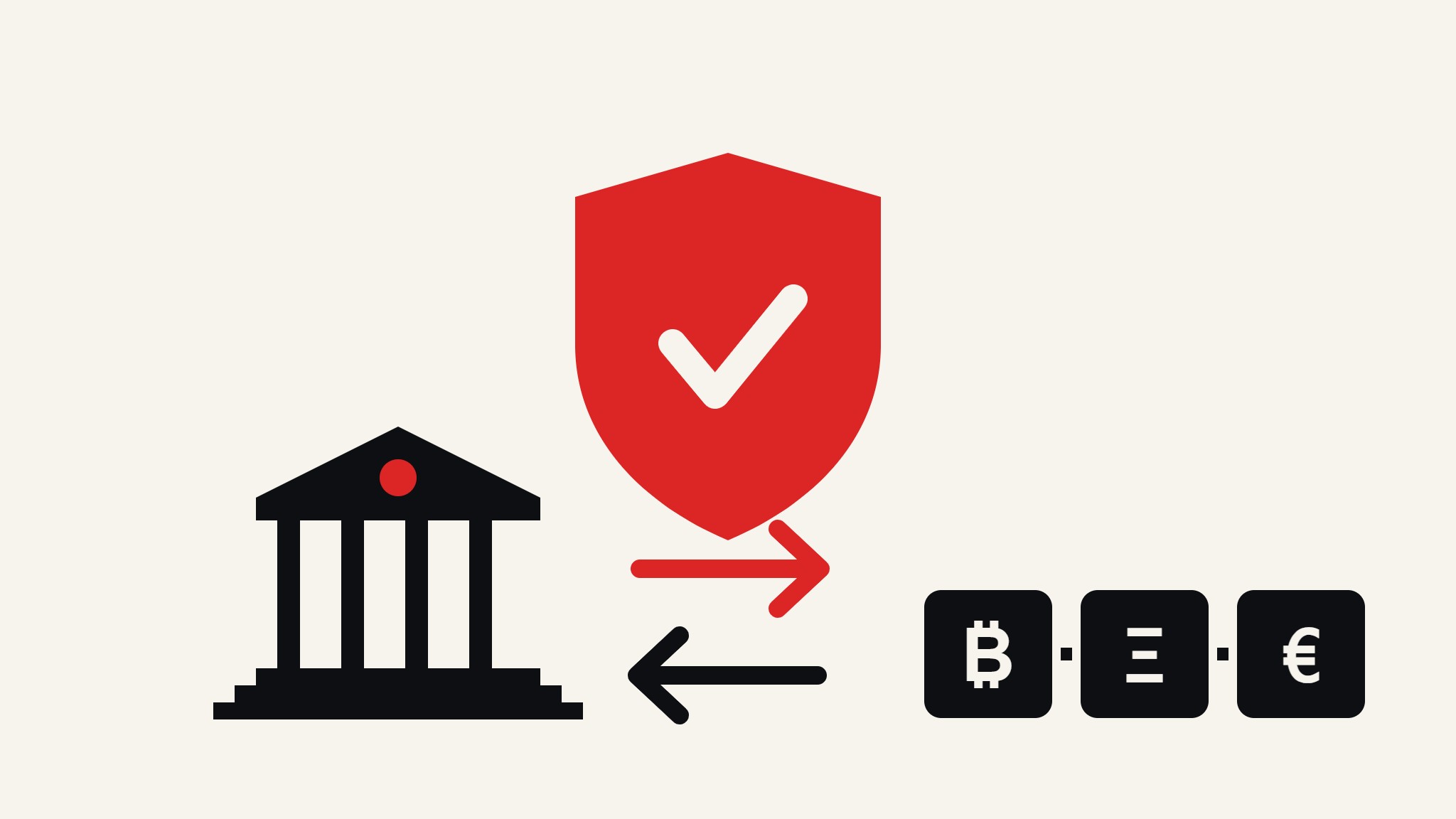
Your Serbian company signs a client agreement with a licensed DASP. Incoming crypto, from customers abroad, investors or your own treasury, goes to the DASP, not to the bank. The DASP converts it to dinars or euros at a documented rate and transfers fiat to your business account with a payment order that names the provider, the amount and the conversion.
The bank sees a transfer from an NBS-supervised institution with paperwork behind it. That is a fiat payment with a traceable source, and most banks accept it. The crypto side stays with the DASP, which keeps the records that the bank or the tax office may ask for later.
What breaks this model:
- routing crypto through personal wallets and then depositing cash;
- taking crypto directly from customers without a licensed provider in between;
- using foreign exchanges that cannot issue statements a Serbian bank will accept;
- paying suppliers or salaries from a wallet.
Each of these creates a flow nobody can explain, and unexplained flows close accounts.
MAXIMUM Group is not a DASP and does not hold client funds. We work with a licensed partner for the crypto leg and build the company, address, accounting and bank application around it. Our finance page covers crypto exchange for individuals; this page is about the company structure.
Are stablecoin payments possible in Serbia?
For settlements with clients and contractors abroad, yes, through a licensed provider.
A company can receive USDT or USDC from a client in another country, convert it through the DASP and book the fiat proceeds as revenue. The reverse works too: to pay a foreign contractor who wants stablecoins, fiat goes to the DASP, the DASP sends the coins, and the invoice and the provider's confirmation go into the accounting file together.
What is not possible: paying a Serbian employee's salary in stablecoins, pricing goods for Serbian customers in stablecoins, or treating a wallet balance as a bank balance. Serbian accounting records the dinar value at the moment of conversion, and the tax office reads the dinar ledger, not the wallet.
Cost: the provider's conversion fee, with our partner on average from 2 to 2.5 percent, plus the bank's standard fees on the fiat side.
Can an iGaming company get crypto banking in Serbia?
Only with a Serbian licence, and even then not for the crypto part of player money.
Online games of chance in Serbia are licensed by the Games of Chance Administration under the Ministry of Finance. An operator without that licence will not get a business account for gaming activity in a Serbian bank, wherever its players are.
For licensed operators, banks treat the business as high risk. Expect a dedicated compliance review and requests for the licence, the player-funds setup, payment processor contracts and the source of the starting capital. Player deposits and payouts run through regulated payment channels, and we know of no Serbian framework that lets an operator take stakes or pay winnings in digital assets. If part of your group treasury is in crypto, the DASP model above applies to corporate flows only, kept strictly apart from gaming flows.
If your gaming business is licensed elsewhere and you need a Serbian company for development, support or marketing, that is a different and much easier case: a service company with foreign clients, no player money, standard account opening.
Is it possible to convert crypto into securities in Serbia?
There are two different questions behind this search.
The plain one: sell digital assets through a licensed provider, receive fiat on your account and buy securities through a Serbian broker or custody bank. This is legal and routine. Capital gains on the crypto sale are taxed at 15 percent, and the tax return is due within 30 days of each sale, not at the end of the year. The securities purchase then follows the broker's normal onboarding. The full picture of what the Law on Digital Assets permits, how a licensed provider is chosen and what taxes apply is in crypto in Serbia: the legal framework.
The second one is tokenised securities: issuing or buying digital tokens that carry rights similar to a financial instrument. The Law on Digital Assets allows this, but an issue needs a white paper approved by the Securities Commission unless an exemption applies, and secondary trading runs through licensed providers. In practice this market is small and approvals are slow. Anyone offering a quick conversion of a coin into a "Serbian security" is describing something that does not exist yet.
There is no route from a wallet straight into a brokerage account without passing through fiat, and no Serbian bank will accept a securities purchase funded from an undocumented wallet.
What documents do banks ask for?
For the company: APR registration extract, founding act, ownership structure down to natural persons, director's passport and residence card.
For the business: a short description of the activity, contracts with clients or a business plan, expected monthly turnover and the countries of your counterparties.
For the crypto part: the DASP agreement, sample provider statements that show the conversion trail, and a one-page explanation of where crypto enters and leaves your operation.
For the founders: source of funds for the starting capital. For crypto founders that means exchange statements, wallet history with on-ramp records, or tax returns. Screenshots do not count. Banks also screen every person in the structure against international restriction lists and politically exposed person lists.
Documents should be in Serbian or English. Anything in another language needs a certified translation, and the bank will not start its review without it.
Founders who need a personal account before the company is registered should read our guide to bank accounts in Serbia for foreigners and non-residents: which banks open an account without a residence permit, what they ask for, how long it takes and what changed after the collapse of Alta banka.
How long does it take and what does it cost?
Registering a company in Serbia takes five working days once the documents are signed. Opening the account is the slow part: for a company with crypto in its business, bank review takes from several weeks to several months, and some banks decline at the end of it. We do not promise an account by a date, and we would advise you to be careful with anyone who does.
Costs: our fees for company setup, registered address and bank application support are on the prices page. The provider charges per conversion. Bank fees for business accounts are standard and published by each bank. A company that works through a licensed provider pays no "crypto licence" fee of its own.
What improves your chances: a real office or coworking address rather than a mailbox, a director who lives in Serbia, an activity code that describes what the company actually does, and a first client contract that is not with a crypto exchange.
What do banks refuse?
- Companies whose only activity is exchanging or trading digital assets without their own DASP licence.
- Structures with nominee directors or shareholders that do not lead to a real person.
- Founders who cannot document where the capital came from.
- Any flow that touches restricted exchanges, mixers or counterparties.
- Offshore parent companies without substance, especially when the Serbian entity is meant to be a payment pass-through.
If your plan matches one of these, paperwork will not fix it, and we will tell you so on the first call rather than take a fee.
FAQ
Can a foreign crypto company open a bank account in Serbia without a local entity? No. Banks open business accounts for Serbian legal entities and registered branches. A foreign company needs a Serbian DOO or branch first.
Does Serbia have a crypto licence for companies? Yes. Under the Law on Digital Assets, the National Bank of Serbia licenses virtual currency service providers and the Securities Commission licenses digital token service providers. It is a full regulatory licence with capital and compliance requirements, so most companies work through an existing licensed provider instead.
Is crypto legal tender in Serbia? No. Digital assets can be bought, sold and held legally, but they are not money. Prices, salaries and taxes are in dinars.
Can I pay employees in Serbia in stablecoins? No. Salaries are paid in dinars to a bank account, with contributions withheld.
Will a Serbian bank accept a transfer from a foreign crypto exchange? Sometimes, with documents, but it is the most common reason for a held transfer. A transfer from a Serbian licensed provider with a conversion statement is accepted far more reliably.
Is iGaming legal in Serbia? Yes, with a licence from the Games of Chance Administration. Unlicensed online operators cannot get banking for gaming activity in Serbia.
Talk to us before you register anything
The order matters: structure first, provider agreement second, bank third. Companies that register, open a wallet and only then look for a bank spend months and often end up with a closed account. We will look at your flows, say which model fits, which banks are realistic for it right now and what the founders need to document. If a Serbian structure does not fit your business, we will say that too.
Company registration is on the business page, relocation of founders and staff on the relocation page. If you need a desk while the paperwork runs, most of our clients sit in our coworking in Novi Sad and Belgrade during the first months; prices are in a separate article.
Telegram: @maximumnsrs Phone: +381 63 557 887 Novi Sad: Železnička 20, Monday to Friday from 8:00 to 20:00, Saturday from 10:00 to 18:00 Belgrade: Kralja Milana 15a, Monday to Friday from 8:00 to 18:00
Sources: Law on Digital Assets (paragraf.rs), National Bank of Serbia (nbs.rs), Securities Commission (sec.gov.rs), Business Registers Agency (apr.gov.rs).